
Whether you’re exploring restaurant franchise opportunities or simply trying to understand the different types of restaurants in Canada, you’ve likely come across terms like quick service restaurant (QSR), fast casual restaurant (FCR), and full-service restaurant (FSR). While these restaurant categories may seem similar, each offers a distinct customer experience, operating model, and business opportunity.
Understanding the differences between quick-service restaurants, fast casual dining, and full-service restaurants can help prospective franchisees choose the right model. From fast food restaurants in Canada to upscale casual dining concepts, each category serves a different purpose and appeals to different customers.
QSR, Fast Casual, and Full-Service Restaurants in Canada
Quick-service restaurants (QSRs) focus on speed, convenience, and efficiency, often offering counter service, drive-thrus, and limited menus.
Fast casual restaurants combine the convenience of a QSR with fresher ingredients, higher-quality food, and a more comfortable dining environment.
Full-service restaurants (FSRs) provide table service, larger menus, and a traditional sit-down dining experience with waitstaff.
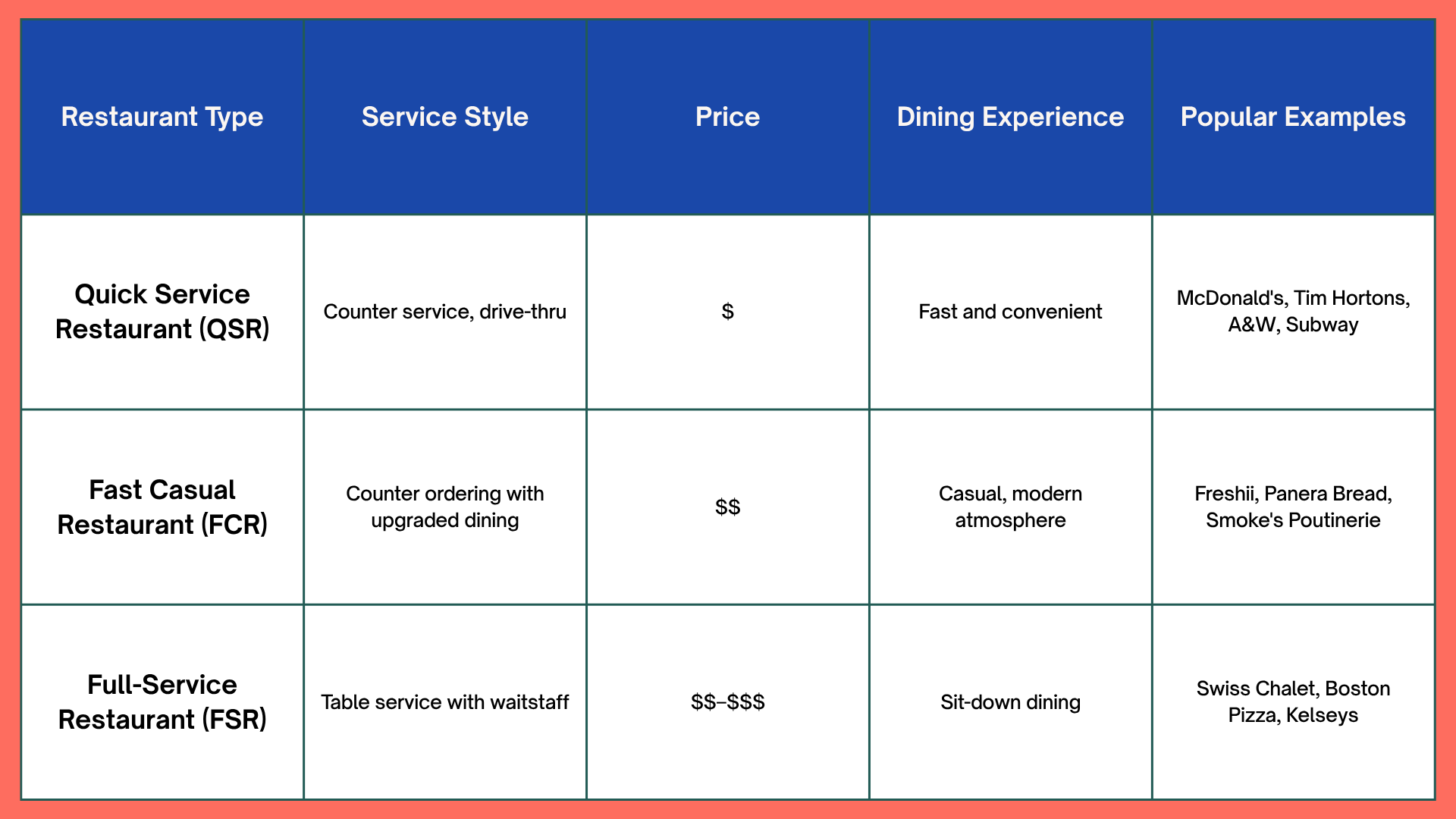
While these restaurant categories differ in service style and customer experience, each can provide attractive franchise opportunities depending on your investment level, business goals, and preferred ownership style.
What Is a Quick Service Restaurant (QSR)?
A quick service restaurant (QSR) is a restaurant designed to serve customers quickly through efficient ordering, food preparation, and service. Also known as fast food restaurants, QSRs emphasize convenience, affordability, and speed, making them one of the most recognizable restaurant formats in Canada.
Today’s quick-service restaurants continue to evolve with mobile ordering, self-service kiosks, loyalty apps, and drive-thru technology that help improve the customer experience while increasing operational efficiency.
Common Characteristics of a QSR
Most quick-service restaurants share several key features:
- Limited, standardized menus
- Fast food prepared quickly
- Counter ordering and pickup
- Drive-thru or takeout options
- Affordable pricing
- Limited table service
- Streamlined operations designed for speed
Because of their efficient operating systems, QSRs can often serve a high volume of customers throughout the day.
Why Entrepreneurs Choose QSR Franchises
Quick-service restaurants remain one of the most popular franchise categories because they offer proven operating systems and strong brand recognition. Depending on the franchise, benefits may include:
- Established customer demand
- Comprehensive franchisor training
- National marketing support
- Proven operating procedures
- Strong brand awareness
However, QSR franchises often require significant staffing, long operating hours, and substantial startup investments compared to many service-based franchise opportunities. It’s important to evaluate the total investment, ongoing operating costs, and lifestyle requirements before deciding whether a quick-service restaurant is the right fit.
What Is a Fast Casual Restaurant?
A fast casual restaurant (FCR) bridges the gap between quick-service restaurants and full-service restaurants. Fast casual dining combines the convenience of ordering at the counter with higher-quality ingredients, freshly prepared meals, and a more inviting dining atmosphere.
Over the past decade, fast casual restaurants have become increasingly popular as consumers seek healthier menu options, customizable meals, and elevated dining experiences without the higher prices typically associated with full-service restaurants.
Characteristics of Fast Casual Restaurants
Fast casual restaurants typically offer:
- Fresh, made-to-order meals
- Higher-quality ingredients
- Expanded menu selections
- More comfortable seating areas
- Modern restaurant design
- Counter ordering with dine-in or takeout options
- Moderate pricing
While customers usually order at the counter, many fast casual restaurants deliver food to the table or provide digital ordering for added convenience.
Why Fast Casual Dining Continues to Grow
Consumer preferences have shifted in recent years, fueling continued demand for fast casual restaurants. Many diners want fresher ingredients, healthier menu options, and a more enjoyable dining environment without sacrificing speed.
For entrepreneurs, fast casual franchises can offer an appealing middle ground between traditional fast food restaurants and full-service restaurants. While startup costs and operating requirements vary by brand, many fast casual concepts provide opportunities to capitalize on changing consumer trends while benefiting from the support of an established franchise system.
What Is a Full-Service Restaurant (FSR)?
A full-service restaurant (FSR) provides customers with a traditional sit-down dining experience. Unlike quick-service restaurants or fast casual restaurants, guests are seated by staff, place their orders with a server, and receive table service throughout their meal.
Full-service restaurants range from casual family dining to upscale fine dining. Because they offer a more personalized experience, they typically have larger menus, more employees, and higher operating costs than other restaurant formats.
Common Characteristics of Full-Service Restaurants
Most full-service restaurants include:
- Table service with waitstaff
- Extensive food and beverage menus
- Full kitchens with made-to-order meals
- Comfortable dining environments
- Alcohol service (where permitted)
- Higher average customer spending
- Longer customer visits
Advantages of Full-Service Restaurant Franchises
For entrepreneurs, full-service restaurant franchises can offer:
- Higher average ticket values
- Strong opportunities for repeat customers
- Multiple revenue streams, including food, beverages, and catering
- Established brand recognition and operating systems
However, they also tend to require larger startup investments, more employees, and greater day-to-day management than many quick-service or fast casual concepts.
Which Restaurant Franchise Is Right for You?
No single restaurant category is better than another. Ultimately, the best choice depends on your goals, budget, and preferred management style.
A Quick-Service Restaurant (QSR) May Be Right If You:
- Enjoy fast-paced operations.
- Prefer standardized systems and processes.
- Want to serve a high volume of customers.
- Are comfortable managing larger teams and extended business hours.
A Fast Casual Restaurant May Be Right If You:
- Want to capitalize on demand for fresh, higher-quality food.
- Prefer a balance between efficiency and customer experience.
- Like modern restaurant concepts with growing consumer appeal.
A Full-Service Restaurant May Be Right If You:
- Enjoy hospitality and customer interaction.
- Want to create memorable dining experiences.
- Are comfortable managing a larger staff and more complex operations.
Restaurant Franchise Trends in Canada
The Canadian restaurant industry continues to evolve as consumer preferences and technology reshape the dining experience. Entrepreneurs considering a restaurant franchise should understand the trends influencing today’s market.
Some of the biggest trends include:
- Increased demand for mobile ordering and delivery services.
- Continued popularity of drive-thru and takeout options.
- Growing consumer interest in healthier and customizable menu items.
- Greater use of self-order kiosks and digital technology.
- Increased focus on operational efficiency due to labor shortages.
Fast casual concepts, in particular, continue to attract customers looking for convenience without sacrificing food quality. At the same time, many quick-service restaurants are investing heavily in technology to improve speed and customer satisfaction.
Understanding these trends can help prospective franchisees identify restaurant concepts that are positioned for long-term growth.
Things to Consider Before Investing in a Restaurant Franchise
Restaurant franchises can be rewarding businesses, but they also require careful planning and due diligence before investing.
Before purchasing a franchise, consider the following:
Startup Costs
Restaurant franchises often require significant upfront investments, including franchise fees, equipment, leasehold improvements, furniture, and inventory.
Staffing Requirements
Restaurants typically employ larger teams than many service-based businesses, making hiring, scheduling, and employee retention an important part of day-to-day operations.
Operating Hours
Many restaurants operate early mornings, evenings, weekends, and holidays. Be sure the required schedule aligns with your lifestyle and long-term goals.
Ongoing Expenses
In addition to food costs and payroll, restaurant owners should budget for royalties, marketing contributions, rent, utilities, insurance, and equipment maintenance.
Location
A strong location can significantly influence customer traffic and long-term success. Evaluate local demographics, competition, accessibility, and visibility before selecting a site.
Franchisor Support
Not all franchise systems offer the same level of support. Look for franchisors that provide comprehensive training, marketing assistance, operational guidance, and ongoing coaching.
Key Takeaway: Successful restaurant franchise ownership depends on much more than serving great food. Careful planning, strong operations, and choosing the right franchise system all play important roles.
Frequently Asked Questions
What does QSR stand for?
QSR stands for Quick Service Restaurant.
What is a quick service restaurant?
A quick service restaurant is a restaurant that emphasizes speed, convenience, and efficiency. Customers typically order at a counter or through a drive-thru and receive their food quickly.
Is fast casual considered fast food?
Not exactly. Fast casual restaurants share some similarities with fast food restaurants, but they generally offer fresher ingredients, more customizable menu options, and a higher-quality dining environment.
What’s the difference between fast casual and full-service restaurants?
Fast casual restaurants typically require customers to order at a counter, while full-service restaurants provide table service with waitstaff throughout the meal.
Are restaurant franchises profitable?
Profitability varies depending on the franchise brand, location, operating expenses, and how effectively the business is managed. No franchisor can guarantee earnings, so it’s important to carefully review the Franchise Disclosure Document (FDD) and speak with existing franchisees during your research.
Do I need restaurant experience to own a restaurant franchise?
Not necessarily. Many franchisors provide comprehensive training and ongoing support, allowing entrepreneurs from a wide range of professional backgrounds to become successful franchise owners.
Explore Restaurant Franchise Opportunities with FranNet
Restaurant franchises remain one of the most recognizable franchise categories, but they’re only one of many paths to business ownership. Depending on your investment level, lifestyle goals, and professional experience, opportunities in home services, senior care, business services, commercial cleaning, business services, fitness, education, pet care, and other industries may also be worth exploring.
At FranNet, our experienced franchise consultants help aspiring entrepreneurs evaluate restaurant franchises and hundreds of other franchise opportunities across Canada. We’ll help you compare business models, understand investment requirements, and identify franchise opportunities that align with your goals, all at no cost to you. Schedule a free consultation with a FranNet franchise consultant today and take the first step toward finding the business that’s right for you.