
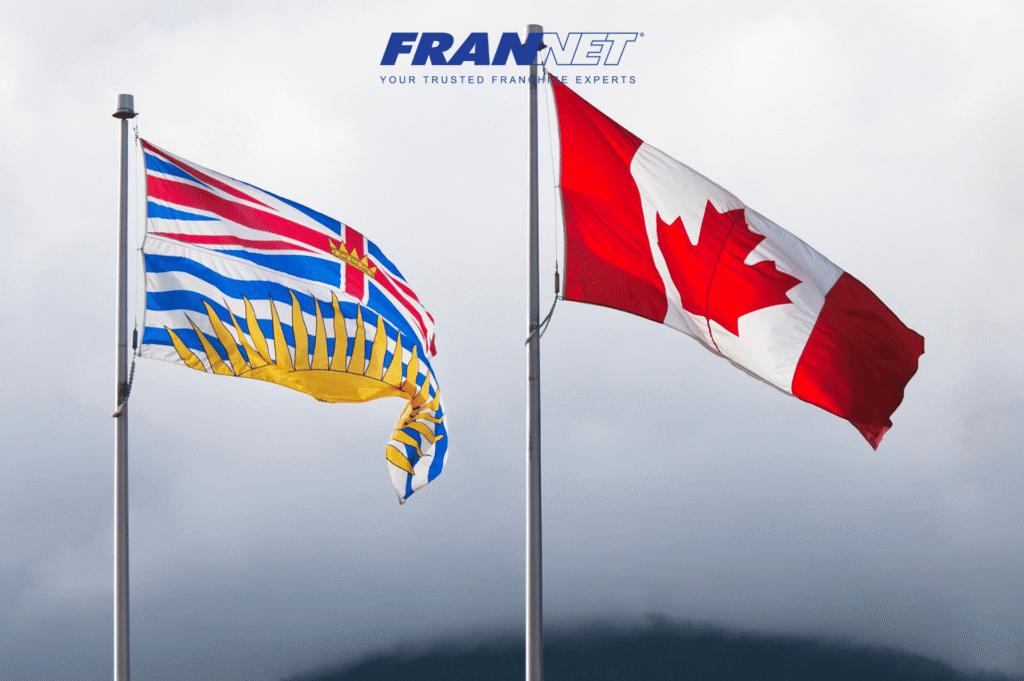
Franchise laws are in the best interests of franchisors and franchisees as they promote fairness and transparency from both parties while supporting the growth and stability of franchising in that region.
In Canada, it’s up to each individual province to create and administer laws related to franchising. In fact, only the following seven of the ten Canadian provinces currently have franchising regulations:
- Alberta
- British Columbia
- Manitoba
- New Brunswick
- Ontario
- Prince Edward Island
- Saskatchewan
The British Columbia Franchises Act came into effect February 1, 2017, making British Columbia the sixth and most recent Canadian province to establish franchising regulations.
What is Included in the British Columbia Franchises Act?
The British Columbia Franchises Act seeks to provide a regulatory framework that protects the interests of franchisors and franchisees. Key components of the act include:
#1 – Purpose & Scope
The overall goal of the act is to promote fair dealing between franchisors and franchisees. To do this, the act ensures that franchisees have all of the details needed for making an informed decision while also providing remedies for non-compliance with franchise agreements.
#2 – Disclosure Requirements
One of the primary aspects of the act is the requirement for franchisors to provide prospective franchisees with a Franchise Disclosure Document (FDD). The FDD discloses all material facts related to the franchised business. This includes financial statements, details of the franchise agreement, and more so that potential franchisees can make an informed decision about joining the franchise.
#3 – Timing of Disclosures
Generally, franchisors must deliver the FDD at least 14 days before the prospective franchisee signs the franchise agreement or makes any payments. However, BC law allows franchisors to accept a refundable deposit from prospective franchisees. Franchisors can also require prospective franchisees to sign a confidentiality agreement before receiving the FDD. They can also deliver FDDs electronically for added convenience.
#4 – Franchisee Rights & Protections
A few of the rights given to franchisees in the act include:
- The right to associate with other franchisees – For example, franchisees who are involved with a class action lawsuit against a franchisor can freely associate with each other. They don’t have to worry about having that right infringed upon.
- The right to receive disclosure documents – As explained already, the franchisor must give the prospective franchisee the Franchise Disclosure Document (FDD) at least 14 days before any agreements are signed.
- The right to rescind a franchise agreement under certain circumstances – A technical error or minor defect does not automatically invalidate an FDD in the province. If the error does not affect the substance of the document, the franchise agreement remains valid. However, certain circumstances may give a franchisee the right to cancel the agreement.
#5 – Rescission Rights
Franchisees may rescind a franchise agreement within certain time frames if the franchisor fails to provide proper disclosure or includes material deficiencies in the FDD. Examples include when a franchisor makes a material misrepresentation, fails to disclose a required material fact, or fails to provide an FDD altogether.
If a franchisor breaches the regulations, franchisees may receive legal protection. Depending on the circumstances, a franchisee may be able to annul the franchise agreement and recover their investment, plus any losses.
#6 – Good Faith & Fair Dealing
The act imposes a duty of fair dealing on both franchisors and franchisees. This is a legal principle that requires each party to act honestly, fairly, and reasonably in their dealings with each other.
#7 – Dispute Resolution Mechanisms
The BC act also provides mechanisms for resolving disputes between franchisors and franchisees, including mediation and arbitration.
Furthermore, the law requires that any litigation brought on a BC-based franchisee is to be carried out in BC under BC law. This is to prevent a BC-based franchisee from being sued under another province’s laws and costing that franchisee significant travel costs to fight litigation in other provinces.
#8 – Penalties for Non-Compliance
The act sets forth penalties for franchisors who fail to comply with its requirements, including the right for the franchisee to rescind the agreement, fines, and potential liability for damages.
What Information is Required in the Franchise Disclosure Document (FDD)?
Some of the items that must be included in the FDD are:
- warning statements about the risks associated with entering into the franchise agreement;
- the franchisor’s business background, including the name under which the franchisor is doing business and the franchisor’s business address;
- the business background of the franchisor’s directors, officers and general partners, including their names, current positions, and previous business experience;
- a description of the business opportunity itself;
- a description of the franchise agreement’s restrictions or requirements regarding the dispute resolution process;
- a list of all fees and costs a franchisee must pay to acquire and operate a location;
- details of any litigation involving the franchisor or its affiliates;
- a description of any territory granted;
- a list of the current franchisees operating in Canada;
- a list of franchise closures over the past three years;
- a list of any former franchisees that left the franchise system in the prior fiscal year;
- details of the franchisor’s advertising fund, specifying the franchisee’s required contribution, the plan for the fund’s administration and whether franchisees will be entitled to reports on the franchisor’s advertising activities;
- a description of the training program for new franchisees and any associated fees;
- any licenses, registrations, authorizations or other permissions required of the franchisee;
- a list of existing and former franchisees for prospects to contact.
In addition to that, audited or reviewed financial statements must also be included along with copies of any and all contracts the prospective franchisee will be required to sign.
Looking to Buy a Franchise in the British Columbia Province?
No matter which province you want to join a franchise in, FranNet can help you find the right one. After our expert franchise consultants evaluate your goals and skills and match you with the perfect franchise opportunity, they will continue to guide you through the process from start to finish. All of this comes at no cost to you. Schedule your free consultation today to get started!