

Choosing a franchise is one of the biggest business decisions you’ll ever make. With thousands of franchise opportunities available across dozens of industries, finding the right fit can feel overwhelming.
The best franchise isn’t necessarily the biggest brand or the one with the highest revenue. It’s the one that aligns with your goals, budget, lifestyle, and long-term vision. This guide walks you through the key steps to choosing a franchise, from narrowing your options to evaluating opportunities and making an informed investment.
How Do You Choose the Right Franchise?
Choosing the right franchise starts with understanding your goals, budget, and preferred lifestyle. From there, compare franchise opportunities based on their business model, startup costs, franchisor support, financial performance, and long-term growth potential. Before investing, review the Franchise Disclosure Document (FDD), speak with current franchisees, and consult trusted professionals to make an informed decision.
Franchise Industry Statistics
Before exploring franchise opportunities, it’s helpful to understand the size and strength of the industry.
Franchising by the Numbers
- Supports nearly 9 million jobs in the United States
- Generates more than $900 billion in annual economic output
- Offers franchise opportunities across hundreds of business categories
- Service-based franchises remain among the fastest-growing sectors
These statistics demonstrate that there isn’t one “best” franchise. Rather, there are thousands of opportunities designed for different investment levels, industries, and ownership styles.
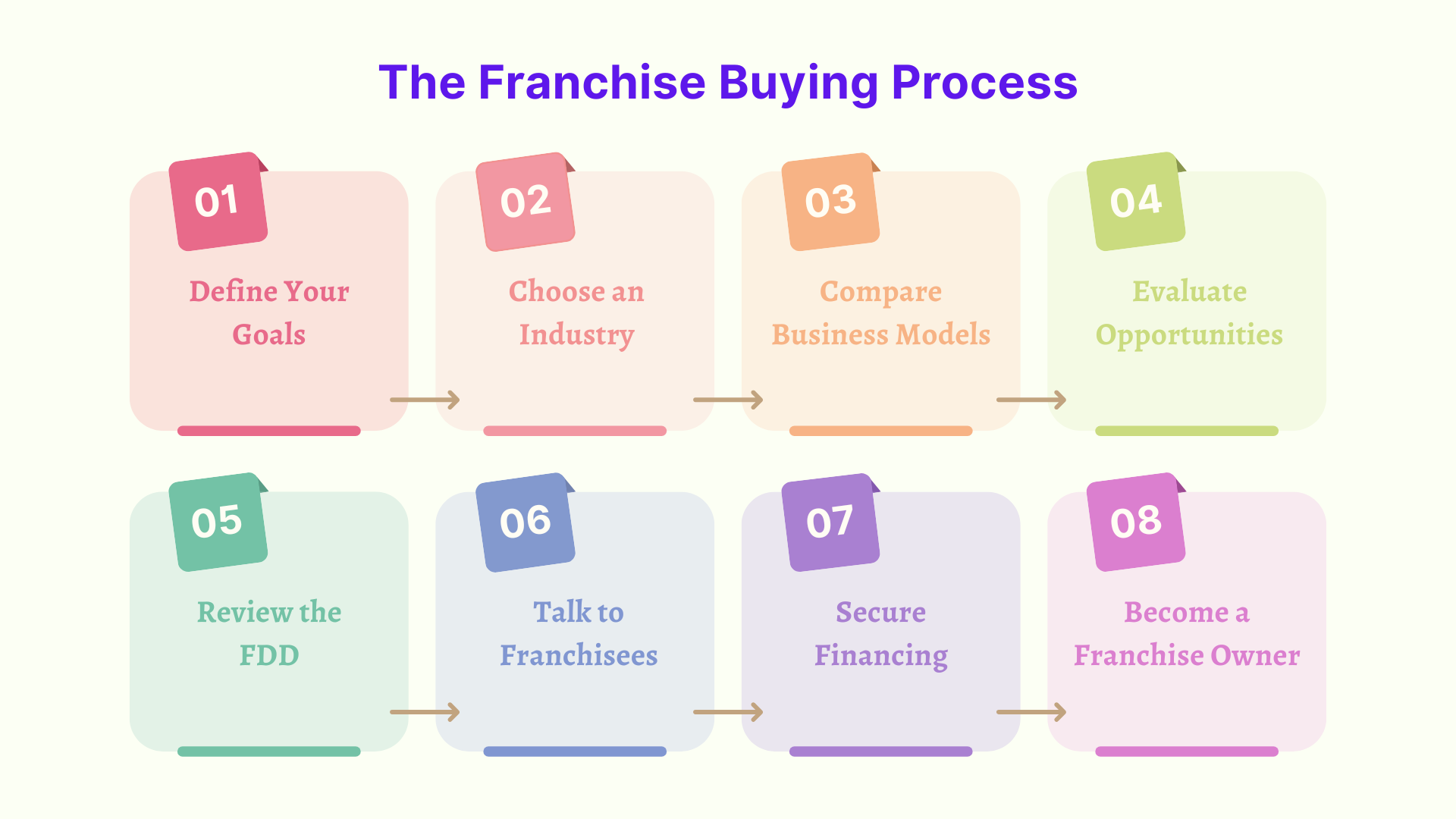
Step 1: Define Your Business Goals
Before comparing franchise brands, define what success looks like for you. Your goals should guide every decision you make throughout the franchise buying process.
It’s also important to understand how involved you want to be in the business. Some franchise owners prefer to manage day-to-day operations, while others choose manager-led or semi-absentee models. Understanding your desired level of involvement early will help narrow your search to franchise systems designed for your preferred ownership style.
Ask yourself:
- How much income do I hope to earn?
- Do I want to work in the business every day or hire a manager?
- Am I looking for flexibility, long-term wealth, or a career change?
- What is my budget and risk tolerance?
- Do my skills and personality align with following an established business system?
Key Takeaway: The right franchise should fit your financial goals and lifestyle, not just your interests.
Step 2: Choose an Industry That Fits You
One of the biggest advantages of franchising is the variety of industries available. Today’s franchise opportunities extend well beyond restaurants.
Popular franchise industries include:
- Home services
- Senior care
- Restoration
- Commercial cleaning
- Child enrichment and education
- Fitness and wellness
- Pet services
- Automotive
- Business services
- Food and beverage
Don’t worry if you don’t have industry experience. Many franchisors provide extensive training and ongoing support, making it possible for first-time business owners to succeed.
Rather than choosing a franchise solely because it’s popular or appears highly profitable, focus on finding an industry that matches your strengths, interests, and long-term motivation. The most successful franchise owners often choose opportunities that fit their preferred way of working, not simply the biggest brand name.
Additional Reading: Top 3 Most Common Franchising Industries {And Why}
Step 3: Compare Franchise Business Models
Not every franchise operates the same way. Understanding different business models can help you narrow your search.
Some common franchise models include:
- Home-based: Operate from a home office with lower overhead.
- Mobile: Travel directly to customers instead of operating from a storefront.
- Retail: Serve customers at a physical location.
- Service-based: Provide professional or home services with recurring demand.
- B2B: Sell products or services to other businesses.
- B2C: Work directly with consumers.
Consider which model best matches your preferred work environment, investment level, and long-term goals.
Additional Reading: Business Format Franchise – Everything You Need to Know
Step 4: Evaluate Franchise Opportunities
Once you’ve narrowed your options, look beyond the brand name and evaluate what each franchisor offers.
Compare franchise opportunities based on:
- Initial training and onboarding
- Ongoing coaching and operational support
- Marketing and advertising assistance
- Technology and business systems
- Protected territories and vendor relationships
- The franchisor’s track record and years in business
- Financial stability of the franchisor
- Brand reputation and feedback from current franchisees
- Growth strategy and long-term expansion plans
- How selective the franchisor is when awarding franchises
Take time to research the franchisor, review independent feedback, and speak with current franchise owners whenever possible.
Key Takeaway: A strong franchise offers more than a recognizable brand. It provides the systems, support, and resources needed to help franchisees succeed.
Step 5: Review the Franchise Disclosure Document (FDD)
Every prospective franchise owner receives a Franchise Disclosure Document (FDD) before signing an agreement. This legal document provides important information about the franchise and is one of your most valuable due diligence tools.
Pay close attention to:
- Item 7: Estimated initial investment and startup costs
- Item 19: Financial Performance Representations (if provided)
- Item 20: Information about current and former franchisees
- Litigation history: Past or ongoing legal disputes
- Franchise fees: Initial fees, royalties, and ongoing costs
Keep in mind that not every franchisor includes an Item 19 Financial Performance Representation. When they do, it can provide helpful insight into franchise performance. However, it should never be viewed as a guarantee of future earnings.
In addition to reviewing the FDD yourself, consider having an experienced franchise attorney explain important provisions such as renewal rights, territory protections, transfer restrictions, and termination clauses. A legal review can help you fully understand your long-term obligations before signing.
Key Takeaway: The FDD helps you understand the risks, costs, and expectations of franchise ownership before making your investment.
Step 6: Talk to Existing Franchise Owners
One of the best ways to evaluate a franchise opportunity is to speak directly with current franchise owners. They can provide firsthand insight into what it’s really like to operate the business beyond the sales presentation.
Consider asking questions such as:
- Would you invest in this franchise again?
- What has surprised you most about ownership?
- How long did it take to become profitable?
- Does the franchisor provide ongoing support?
- Has the support improved or changed over time?
- What advice would you give a new franchisee?
- What unexpected challenges did you encounter after opening?
- Were the startup costs close to what you expected?
- How responsive is the franchisor when problems arise?
- What would you do differently if you started again?
Whenever possible, speak with franchisees operating in different markets and at different stages of ownership. Hearing from both newer and more experienced owners provides a more balanced understanding of the opportunity. These conversations can help confirm whether the opportunity aligns with your expectations and long-term goals.
Step 7: Understand the Total Investment
The franchise fee is only one part of your total investment. Before buying a franchise, make sure you understand all of the costs involved.
Common startup and ongoing expenses include:
- Initial franchise fee
- Equipment and inventory
- Leasehold improvements or build-out
- Working capital
- Royalties
- Marketing or advertising fund contributions
- Insurance
- Licenses and permits
Many new franchise owners underestimate the amount of working capital needed during the first several months of operation. Building a financial cushion can help your business navigate its early stages more comfortably.
Key Takeaway: Focus on the total investment (not just the franchise fee) when comparing opportunities.
Step 8: Build Your Financing Strategy
If you don’t plan to purchase a franchise with cash, explore your financing options before moving forward.
Common funding sources include:
- SBA loans
- Conventional bank financing
- Home equity financing
- Retirement rollovers (ROBS)
- Personal savings or investment funds
The right financing strategy depends on your financial situation, investment goals, and the franchise you’re considering. Many franchise consultants can also help connect you with financing resources that specialize in franchise ownership.
Step 9: Build Your Advisory Team
Buying a franchise is easier when you have experienced professionals guiding the process.
Your advisory team may include:
- Franchise consultant: Helps match you with franchise opportunities that fit your goals and investment level.
- Franchise attorney: Reviews the Franchise Disclosure Document and franchise agreement.
- CPA: Evaluates financial projections and tax considerations.
- Financial advisor: Helps determine how the investment fits into your overall financial plan.
Working with the right professionals can give you greater confidence throughout the franchise buying process.
Step 10: Attend Discovery Day
Many franchisors invite qualified candidates to attend Discovery Day before making a final decision. This is your opportunity to meet the leadership team, learn more about the company’s culture, ask detailed questions, and determine whether the franchisor is the right long-term partner.
Discovery Day should confirm, not create, your confidence in the opportunity. By the time you attend, you should already have completed most of your research, reviewed the FDD, and spoken with current franchisees.
Step 11: Make an Informed Decision
By this stage, you’ve completed your research, reviewed the financials, and spoken with existing franchise owners. Now it’s time to compare your top opportunities objectively.
Consider each franchise based on:
- Lifestyle fit
- Company culture
- Initial investment
- Long-term earning potential
- Franchisor support
- Personal interests and strengths
Avoid making an emotional decision based solely on a recognizable brand or exciting sales presentation. The best franchise is the one that aligns with your goals and positions you for long-term success.
Key Takeaway: Choose the franchise that’s the best overall fit, not simply the most popular one.
Common Mistakes to Avoid When Choosing a Franchise
Even experienced entrepreneurs can overlook important details during the franchise buying process. Avoid these common mistakes:
- Choosing a franchise based only on potential earnings
- Ignoring company culture and franchisor support
- Underestimating startup and working capital costs
- Skipping conversations with existing franchisees
- Failing to research competitors in your market
- Rushing through the Franchise Disclosure Document
- Feeling pressured to make a quick decision
- Choosing a franchise because it’s popular rather than because it’s the right fit
- Evaluating too many franchise opportunities at once instead of narrowing your search
Taking your time and completing thorough due diligence can help you make a more informed investment.
Frequently Asked Questions
How do I choose a franchise?
Start by defining your goals, budget, and preferred lifestyle. Then compare franchise opportunities based on their business model, investment requirements, support systems, and long-term growth potential.
How much money do I need to buy a franchise?
Investment requirements vary widely by industry and brand. Some home-based franchises require relatively modest investments, while others (such as restaurants or retail concepts) may require significantly more capital.
How do I evaluate franchise opportunities?
Review the Franchise Disclosure Document, compare startup costs, evaluate franchisor support, speak with current franchisees, and research the company’s reputation before making a decision.
How many franchise opportunities should I seriously evaluate?
Most buyers benefit from narrowing their search to a small number of well-qualified opportunities rather than researching dozens of brands. Focusing on a few franchises that closely match your goals allows for more meaningful due diligence and easier comparisons.
Can I buy a franchise with no experience?
Yes. Many franchise systems are designed for first-time business owners and provide comprehensive training and ongoing operational support.
What is the Franchise Disclosure Document?
The FDD is a legal document that outlines important information about a franchise, including startup costs, fees, financial performance (when available), legal history, and franchisee obligations.
Is franchising less risky than starting a business?
While every business carries risk, franchising offers the advantage of an established brand, proven systems, and ongoing support, which may reduce some of the uncertainty associated with starting an independent business.
Should I work with a franchise consultant?
Many prospective franchise owners find value in working with a franchise consultant who can help identify opportunities, explain the franchise buying process, and provide objective guidance throughout the decision-making process.
Ready to Find the Right Franchise?
Choosing a franchise is one of the biggest business decisions you’ll make, and you don’t have to navigate it alone.
FranNet consultants help aspiring business owners identify franchise opportunities that align with their goals, investment level, and lifestyle. From exploring industries and evaluating Franchise Disclosure Documents to connecting with reputable franchisors, we provide personalized guidance every step of the way.
Schedule a free consultation today and take the first step toward finding the right franchise for your future.