
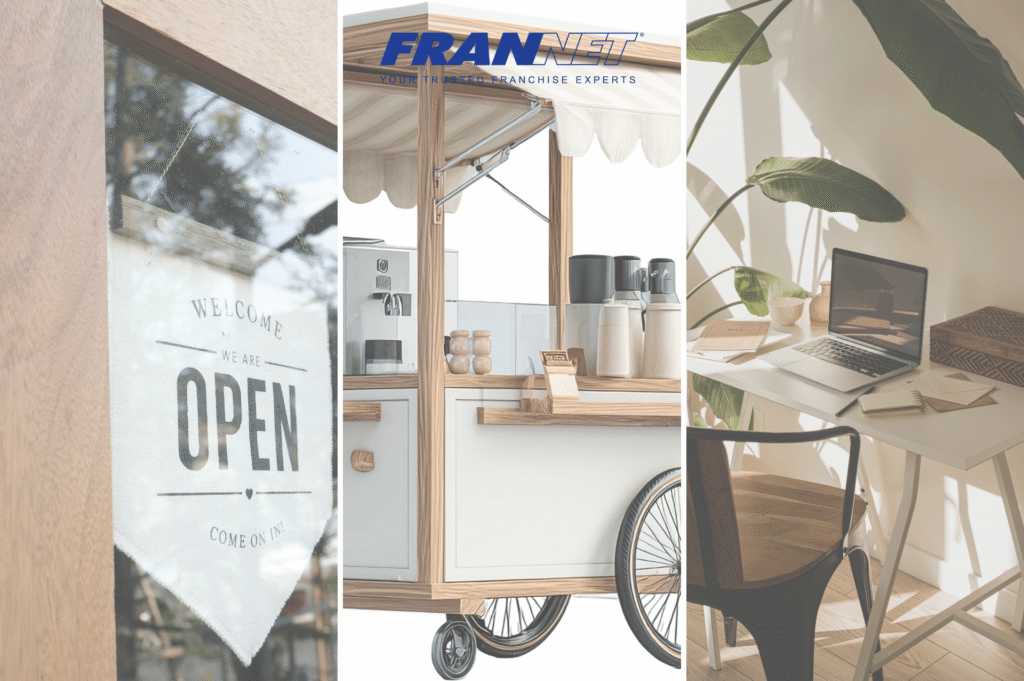
A franchise doesn’t always require a traditional brick-and-mortar storefront.
While many franchises operate from standalone retail locations, franchise systems can use several different formats. Depending on the business model, franchisees may operate from a traditional location, within another facility, from a mobile unit, or from a home office.
These formats can differ significantly in their real estate requirements, startup costs, customer acquisition, daily operations, and growth potential. Understanding the differences can help you identify which type of franchise best aligns with your budget, goals, and preferred way of working.
What Is a Traditional Franchise Unit?
A traditional franchise unit is a conventional brick-and-mortar location where customers visit the business directly. Standalone storefronts, restaurants, retail locations, and other dedicated commercial spaces are common examples.
Traditional franchise locations typically require more real estate and infrastructure than other franchise formats. Costs may include leasing or purchasing a property, construction or buildout, equipment, signage, utilities, inventory, and other expenses associated with operating a physical location.
The franchisor may provide assistance with site selection, lease negotiations, design, construction, and other aspects of opening the location, depending on the franchise system.
The primary advantage of a traditional location is having a dedicated space where customers can consistently find the business. However, the additional real estate and operating requirements can make this format more capital-intensive than some mobile or home-based models.
Examples of a traditional franchise include:
- Full-service restaurants
- Retail stores
- Fitness centers
- Childcare centers
- Hotels
- Dedicated service centers
- Other standalone commercial locations
What Is a Non-Traditional Franchise Unit?
A non-traditional franchise operates within another established property or facility rather than occupying a conventional standalone location. These units are often designed to fit into spaces where customers are already visiting.
Examples can include:
- Airports
- Shopping malls
- College and university campuses
- Hospitals
- Hotels
- Stadiums and arenas
- Transportation hubs
- Other large commercial or institutional facilities
Because the franchise shares space with another destination, the location may require less square footage than a traditional storefront. Some non-traditional units also operate with a more limited menu, product selection, or service offering because of space or facility restrictions.
The customer experience can also differ from a traditional franchise. Instead of traveling specifically to visit the franchise, customers may discover or use the business while visiting the larger facility.
For franchisees, this format can provide access to an established flow of potential customers without requiring a full standalone location. However, the franchisee may have less control over the location, operating hours, signage, customer traffic, and other aspects of the business.
What Is a Mobile Franchise Unit?
A mobile franchise operates from a vehicle, trailer, or other movable setup rather than a permanent storefront. Instead of waiting for customers to visit a fixed location, the business travels to customers or operates at different locations throughout its territory.
Mobile franchises include:
- Food trucks and mobile food businesses
- Mobile pet grooming
- Cleaning services
- Home repair and maintenance
- Pest control
- Automotive services
- Personal training and wellness services
- Mobile beauty services
- Event and entertainment businesses
- Vending and other mobile retail concepts
One of the defining characteristics of a mobile franchise is that the vehicle or mobile unit can serve as both the operating location and a form of brand visibility. Depending on the business, franchisees may travel directly to customers’ homes or businesses or set up at events and other high-traffic locations.
Potential Advantages of Mobile Franchises
Mobile franchises can eliminate or reduce the need for a traditional commercial storefront. It also typically needs fewer employees to operate, particularly during the early stages of the business.
Other advantages include:
- The ability to bring services directly to customers
- Greater flexibility in where the business operates
- Lower real estate requirements
- Opportunities to serve multiple customer locations
- A mobile unit that provides additional brand visibility
However, mobile does not necessarily mean low-cost or easy to operate. The vehicle or equipment may represent a significant investment, and expenses can include fuel, maintenance, insurance, storage, equipment, licensing, and other operating costs.
Challenges of Operating a Mobile Franchise
Mobile businesses also come with considerations that don’t apply to every traditional franchise.
- Owner dependant -The business may depend heavily on the owner’s availability, especially when the franchise starts with a small team. If the owner is the primary service provider, taking time away from the business can directly affect its capacity to generate revenue.
- Scalability – Scaling the business requires additional vehicles, equipment, employees, or service territories. Prospective franchisees should understand how many customers or service calls a single unit can realistically handle and what it would cost to add additional units.
- Territory – Review how the franchise defines your territory and whether it provides sufficient access to potential customers to support your business goals.
- Regulations – Mobile businesses may be subject to local licensing, parking, zoning, food-service, or other regulatory requirements. Requirements vary depending on the business and location, so research the applicable rules before investing.
What Is a Home-Based Franchise Unit?
A home-based franchise is designed to be operated primarily from the franchisee’s home rather than from a dedicated commercial location. The business may be managed from a home office while services are delivered virtually, at customer locations, or through another operating model.
Technology has expanded the types of businesses that can operate from home. Depending on the franchise, home-based opportunities can include consulting, education, business services, marketing, cleaning, and other service businesses.
Potential Advantages of Home-Based Franchises
The most obvious benefit is the ability to operate without leasing a dedicated commercial office or storefront. This can reduce certain overhead expenses and eliminate a daily commute to a separate workplace.
Home-based franchises may also offer flexibility in how and when the owner manages the business. Cloud-based software, online communication, scheduling platforms, and other digital tools can allow franchisees to manage many business functions remotely.
However, a home-based franchise isn’t necessarily a work-from-home job. You may still need to travel to clients, meet customers elsewhere, manage employees, or operate from locations outside your home.
Potential Challenges of Home-Based Franchises
Working from home can blur the boundaries between business and personal life. Franchisees may also need to create a dedicated workspace and establish reliable systems for managing customers, employees, records, and other business activities.
Local requirements can also apply. Depending on the business and location, you may need to consider business registration, zoning or home-occupation rules, insurance, licensing, and other requirements before operating from your home.
Home-Based vs. Mobile Franchise: What’s the Difference
A home-based franchise and a mobile franchise can both operate without a traditional storefront, but they aren’t the same thing.
A home-based franchise uses the owner’s home as the primary base of operations. The owner may perform much of the administrative or operational work from a home office while delivering services virtually or elsewhere.
A mobile franchise uses a vehicle, trailer, or other mobile setup as part of the business’s operations. Of course, the administrative side of a mobile service business may be managed from a home office. However, the owner and/or employees will use company vehicles to travel to customers.
The distinction matters because each model has different equipment, staffing, territory, regulatory, and day-to-day operating considerations.
Which Franchise Format Has the Lowest Startup Cost?
There is no universal ranking for how much a franchise costs. A mobile or home-based franchise may have lower real estate requirements than a traditional location, but the total investment depends on the specific franchise.
When comparing franchise opportunities, look at the total initial investment and ongoing expenses, not simply whether the business requires a building.
How to Choose the Right Franchise Format
The right franchise format depends on more than the amount of money you have available. Consider how each model fits your preferred working environment, skills, lifestyle, and business goals.
Ask yourself:
- How much capital can I invest? Look at the total initial investment and working capital requirements.
- Do I want a physical location? Consider whether you prefer a dedicated storefront, a smaller location within another facility, a mobile business, or a home office.
- How much flexibility do I want? Mobile and home-based models may offer more flexibility, but every franchise has operational requirements and obligations.
- Do I want customers to come to me or do I want to go to them? This can be an important distinction between traditional and mobile businesses.
- How much real estate responsibility am I comfortable with? Consider leasing, buildout, maintenance, utilities, and other location-related expenses.
- How much do I want to manage employees? Some mobile or home-based models can start with smaller teams, while other concepts require more extensive staffing.
- What does the local market support? A format that works well in one market may not have the same demand or operating conditions in another.
Additionally, review the franchise disclosure document, understand the full investment and operating requirements, and speak with current franchisees before making a decision.
Explore Your Franchise Options
You don’t necessarily need a traditional storefront to become a franchise owner. Traditional, non-traditional, mobile, and home-based franchise units each offer different approaches to operating a business.
If you’re unsure which format aligns with your goals, a FranNet franchise consultant can help you explore available opportunities based on your investment range, experience, interests, and preferred business model. Schedule a free consultation today to get started!