

If you’re considering franchise ownership, one of the first decisions you’ll face is whether to buy an existing franchise or open a brand-new location.
Both options can lead to successful business ownership, but they offer very different advantages, risks, and timelines.
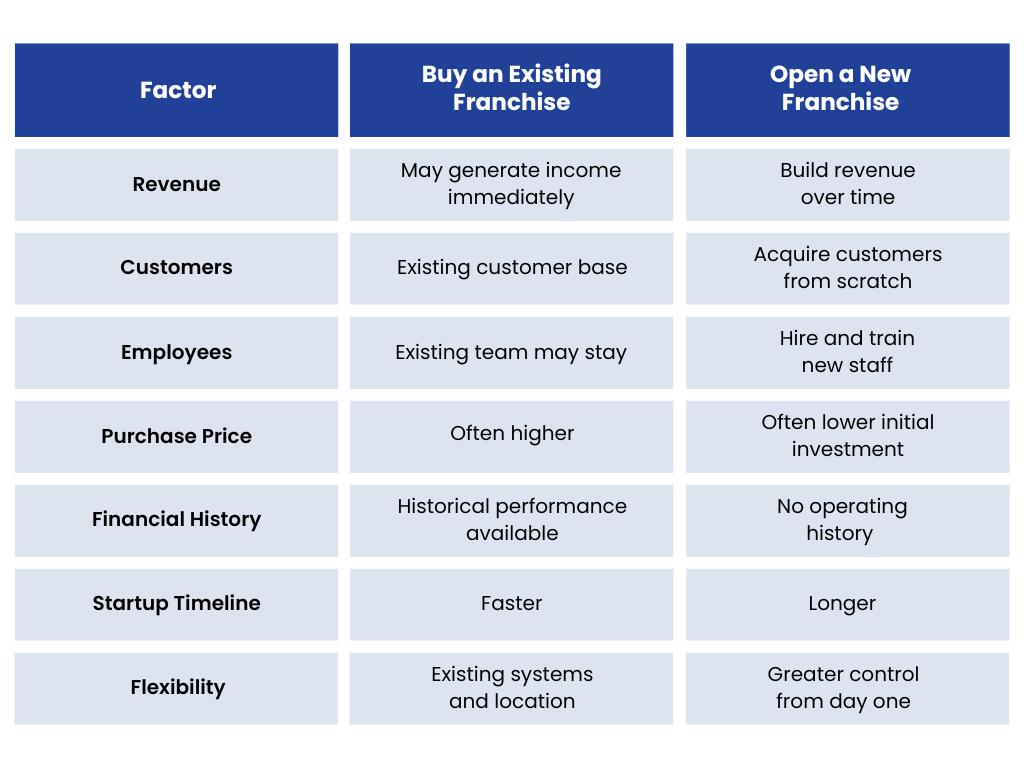
Buying into a franchise resale can provide immediate cash flow and an established customer base. Starting a new franchise business gives you a clean slate and the opportunity to build the operation from the ground up.
So which path is right for you?
At FranNet, we help aspiring franchisees evaluate both options and determine which opportunity best aligns with their goals, budget, and lifestyle.
Can You Buy an Existing Franchise?
Yes. Franchise resales are a normal part of the franchise lifecycle.
Owners may decide to sell for many reasons, including:
- Retirement
- Relocation
- Health issues
- Family circumstances
- Pursuing other opportunities
Not every franchise resale looks the same. Some businesses are thriving and generating strong profits, while others require operational improvements. In general, franchise resale opportunities tend to fall into three categories:
- Cash Cow: A mature, profitable business with strong cash flow that typically commands a premium purchase price.
- On-Track Business: A healthy operation with room for future growth. Owners often sell because of retirement, relocation, or changing personal circumstances, not because the business is struggling
- Turnaround Opportunity (“Fixer Upper”): A business that may need operational improvements, marketing changes, or stronger management. These opportunities often sell at a lower price but require more hands-on involvement.
Buying an Existing Franchise: Pros and Cons
Advantages of Buying an Existing Franchise:
- Immediate Revenue – Unlike a new location, an existing franchise may already be generating income from day one.
- Established Customer Base – You inherit existing clients, local brand awareness, and vendor relationships.
- Trained Staff – Employees may already be in place and familiar with daily operations.
- Historical Financial Data – You can review actual sales, expenses, and cash flow before making a decision.
- Faster Ramp-Up – You may avoid the slower early-stage growth period common with new businesses.
- Potentially Easier Financing – Lenders often view an established business with financial history as less risky than a startup.
- Possible Seller Transition Support – Many sellers stay involved during the handoff period to introduce customers, train the new owner, and ensure a smoother transition.
Potential Drawbacks:
- Higher upfront purchase price
- Legacy operational issues
- Employee or customer retention concerns
- Transfer fees and franchisor approval requirements
- Lease or facility constraints that may require additional investments
Opening a New Franchise Location: Pros and Cons
Advantages of Starting a Franchise Business:
- Clean Slate – You can build your own culture, team, and systems from the beginning.
- New Equipment and Lease Terms – There are fewer inherited issues to address.
- More Territory Choices – Depending on the brand, you may have access to attractive undeveloped markets.
- Lower Initial Cost – Some new franchise opportunities may cost less than acquiring a high-performing resale.
Potential Drawbacks:
- No existing revenue
- Time required to build a customer base
- Hiring and training from scratch
- Greater uncertainty during the startup phase
Key Questions to Ask Yourself
When deciding whether to buy an existing franchise or open a new location, consider:
- Do you want immediate cash flow or are you comfortable building gradually?
- Are you willing to inherit existing staff and systems?
- How important is a clean slate?
- What level of risk fits your financial goals?
- Which option aligns with your preferred timeline?
- Does the business have a proven history of profitability?
- Why is the current owner selling?
- Are you comfortable taking over an existing company culture, or would you rather build your own?
There is no one-size-fits-all answer.
How to Purchase a Franchise: Due Diligence Matters
Whether you are purchasing a franchise resale or starting a new unit, the due diligence process is essential.
Important steps include:
- Reviewing the Franchise Disclosure Document (FDD) to understand the franchise’s fees, obligations, and legal requirements.
- Speaking with existing franchisees to learn about their experiences with the brand, franchisor support, and day-to-day operations.
- Analyzing startup costs, working capital needs, and historical financial performance, including financial statements and tax records for an existing franchise.
- Evaluating the franchisor’s training and ongoing support to ensure you understand the resources available before and after opening.
- Consulting with a franchise attorney and accountant to review legal documents, financials, and the purchase agreement before moving forward.
- Understanding why the current owner is selling and whether the reason raises any concerns about the business or market.
- Assessing the condition of the business, including equipment, inventory, assets, and the location’s reputation within the community.
- Reviewing lease terms, transfer requirements, and franchisor approval processes, including any applicable transfer fees or restrictions.
What Makes a Good Franchise Resale?
A strong franchise resale isn’t simply one that’s profitable today. Look for businesses that demonstrate consistent financial performance, positive customer reviews, stable staffing, and a supportive franchisor. Understanding why the current owner is selling is just as important. Retirement or relocation often presents a very different opportunity than selling because of declining sales or conflicts with the franchisor.
Which Option Is Better?
Buying an existing franchise may be ideal if you want:
- Proven cash flow
- Historical performance data
- A shorter path to profitability
Opening a new location may be better if you want:
- Maximum control
- A fresh start
- Access to new territories
The right choice depends on your goals, investment capacity, and appetite for startup versus operational risk.
Think Beyond Your Initial Investment
Research suggests that franchise businesses may retain stronger resale value than comparable independent businesses. A peer-reviewed study published in the Journal of Business and Economic Studies found that franchise businesses sold for approximately 1.5 times the resale value of comparable non-franchise businesses, highlighting the potential value of established brands and proven operating systems.
How to Find Franchise Resale Opportunities
Franchise resales aren’t always publicly listed, and availability varies by brand, industry, and location. Opportunities may be available through franchisors, franchise consultants, business brokers, or existing franchise owners looking to transition out of the business. Working with a franchise consultant can help you identify resale opportunities that align with your investment goals and geographic preferences.
Ready to Explore Franchise Opportunities?
Both buying an existing franchise and opening a new location can be excellent ways to enter the world of franchise ownership.
Connect with a FranNet franchise consultant for free, personalized guidance. We’ll help you compare your options and identify the franchise opportunity that best fits your budget, lifestyle, and long-term goals. Schedule your consultation today!