
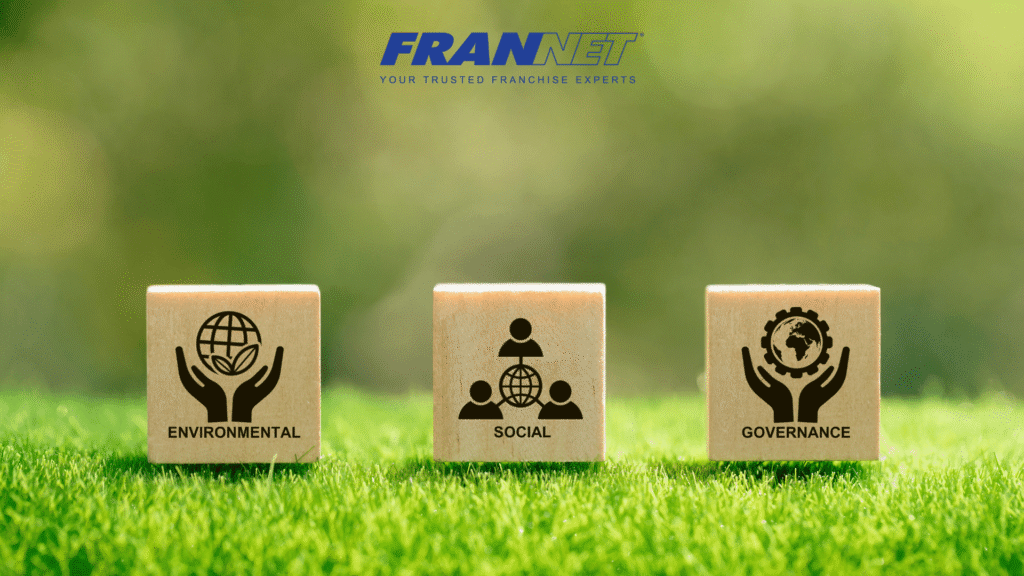
In the modern business world, profitability is no longer the only metric of success. Today, investors, lenders, and consumers are looking at how a company impacts the world around it. This is where ESG comes into play. But what is ESG, and specifically, what is ESG in business for a franchise owner?
ESG stands for Environmental, Social, and Governance. Together, these three pillars form a framework used to evaluate a company’s sustainability and ethical impact.
Breaking Down the ESG Meaning
To implement effective ESG practices, you must understand the three specific areas of focus:
#1 – E is for Environment
ESG environment factors look at how a business performs as a steward of the physical world.
For a franchise, this might include:
- Reducing energy consumption in a storefront.
- Implementing waste management and recycling programs.
- Transitioning to electric service fleets or eco-friendly cleaning supplies.
#2 – S is for Social
The “Social” aspect examines how a company manages relationships with employees, suppliers, customers, and the communities where it operates. In the franchise world, this involves:
- Fair labor practices and employee safety.
- Diversity, equity, and inclusion (DEI) initiatives.
- Community engagement and local charitable support.
#3 – G is for Governance
ESG governance deals with a company’s leadership, audits, internal controls, and shareholder rights. In ESG management, this ensures that the business is being run transparently and legally. It includes:
- Ethical decision-making processes.
- Transparent executive compensation.
- Data privacy and protection for customers.
Why is ESG Important for Franchises?
ESG can play an important role for local franchise owners when it comes to finance and consumer behavior.
- Access to Capital: Many banks and lenders now perform an ESG assessment before approving business loans. A strong ESG score can lead to better interest rates and easier access to funding (Woodsboro Bank).
- Consumer Demand: Modern consumers, particularly Millennials and Gen Z, actively seek out brands with strong ESG sustainability credentials. They want to know their money is going to a “purpose-driven” business (PwC).
- Brand Resilience: Implementing these practices helps mitigate risks, from regulatory fines to reputational damage during a social crisis.
Taking Action: The ESG Report and Assessment
If you are looking to professionalize your operations, you may eventually need to produce an ESG report. This is a public-facing document that discloses a company’s ESG performance. While this was once reserved for massive corporations, many franchisors are now providing templates for their franchisees to track these metrics locally.
The process usually begins with an ESG assessment, where you analyze your current footprint and identify areas for improvement. This could be as simple as switching to LED lighting or as complex as overhauling your supply chain to ensure ethical sourcing.
Frequently Asked Questions About ESG
#1 – I’m a small franchise owner. Do these laws apply to me?
Directly? Probably not yet. Most laws target companies with hundreds of millions in revenue. However, if your franchisor is a large public company, they will need data from you to complete their reports. Being ESG-ready makes you a better partner for them.
#2 – What is the first step in an ESG assessment?
Start with an energy audit. Tracking your utility usage (electricity, gas, water) is the easiest way to begin the “Environmental” portion of your ESG journey.
#3 – Is ESG just another word for “being green”?
No. While the “E” (Environment) gets the most press, ESG also measures how you treat your employees (Social) and how transparently you run your business (Governance). It’s a holistic view of business health.
#4 – Can a good ESG score actually save me money?
Yes. Beyond savings on supplies, many lenders offer “Sustainability-Linked Loans” with lower interest rates for businesses that meet certain ESG benchmarks.
#5 – What is “Greenwashing” and how do I avoid it?
Greenwashing is making false or exaggerated claims about your sustainability. To avoid it, never make a claim you can’t back up with data. If you say you’ve reduced waste by 20%, ensure you have the disposal receipts to prove it.
Navigating the Future of Sustainable Franchising
The rise of ESG marks a significant shift in the global economy. For the franchise industry, it represents an opportunity to demonstrate that local business ownership can be a force for global good. By integrating ESG practices into your daily operations, you are building a more valuable, resilient asset.
Align Your Investment with Your Values
Finding a franchise that aligns with your commitment to sustainability and ethics is a critical part of the discovery process. You don’t have to navigate these complex metrics alone.
If you’re ready to explore franchise opportunities that lead the way in ESG governance and environmental impact, connect with a FranNet franchise consultant today. Their expert, no-cost matching process will help you find a business that fits your financial goals and your values. Schedule your free consultation today!