
Commercial Cleaning Franchise
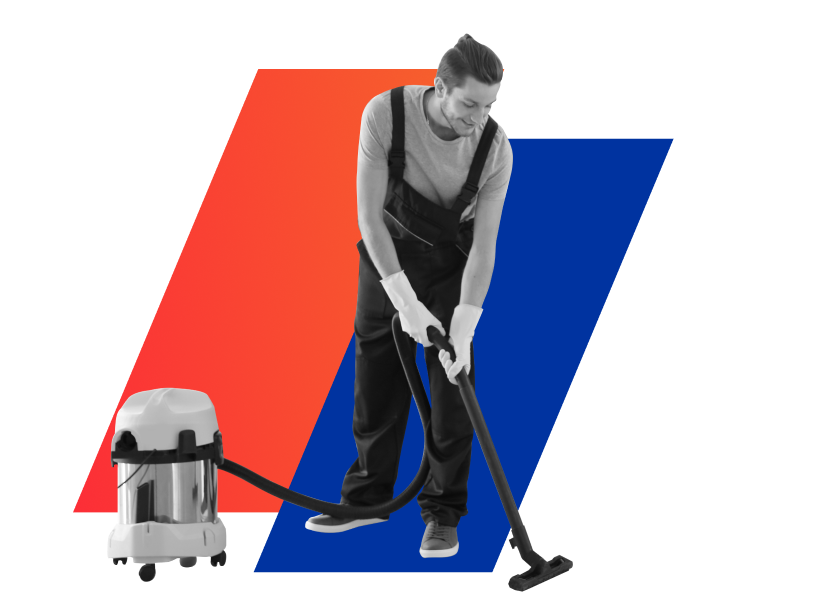
What is a commercial cleaning franchise?
A commercial cleaning franchise provides recurring janitorial and specialist cleaning services to businesses (offices, medical facilities, schools, restaurants and industrial sites) under an established brand. Unlike residential cleaning, the work is contracted, scheduled and recurring, which makes revenue considerably more predictable.
The category’s defining feature is the contract. A commercial cleaning business does not chase one-off jobs; it signs facilities to ongoing agreements, then delivers reliably enough to keep them. That gives it a recurring-revenue profile closer to a subscription than to a trade.
How much does it cost to open a commercial cleaning franchise?
Entry costs are low relative to most B2B businesses, but the range is wide because two different roles sit inside the category.
- Unit or single-operator franchises, you win and service contracts in a defined territory. Lower entry cost; capital goes into equipment, vehicles, insurance and working capital.
- Master or area-developer licences, you hold rights to a region and sub-franchise to unit operators. Substantially higher entry cost, and a fundamentally different job: you are recruiting and supporting franchisees rather than cleaning buildings.
Specialist niches sit alongside general janitorial, kitchen-hood cleaning, dryer-vent servicing, restoration, pool servicing. They typically require specific equipment, certification or compliance knowledge, which narrows competition and can support better margins than general cleaning contracts.
The largest hidden cost in this category is not equipment. It is working capital: commercial contracts commonly pay on 30–60 day terms while payroll runs weekly, and undercapitalised owners get caught in that gap during growth, not during downturns.
What does the owner actually do?
You sell contracts and manage crews, you do not clean. The role is overwhelmingly business development in the first two years: identifying facilities, quoting, and winning recurring agreements. After that it becomes crew management, quality auditing and account retention.
Most cleaning happens outside business hours, which shapes the job in a way buyers often miss: your workforce is largely evening and overnight, and managing a distributed night crew you rarely see in person is a distinct skill. Systems, checklists and inspection routines matter more than charisma.
Who is a good fit for a janitorial franchise?
People who are comfortable with B2B selling. This is the most sales-driven category in commercial services. Owners who dislike prospecting struggle regardless of how good their operations are, because nothing happens until contracts are signed.
- Comfort approaching facility managers and building owners, and patience with long sales cycles.
- Willingness to build systems for a workforce that works while you sleep.
- Attention to compliance, medical, food-service and industrial sites carry specific standards.
- Capital discipline to absorb the gap between client payment terms and weekly payroll.
Pros and cons
Strengths: genuinely recurring contracted revenue; low capital entry relative to most B2B businesses; demand that persists through downturns because facilities must still be cleaned; and scalability, adding a contract rarely requires new premises.
Difficulties: labour turnover is high across the category; contracts are competitively priced and can be lost at renewal; the payment-terms gap traps undercapitalised owners; and quality failures are noticed by the client immediately.
How do you evaluate commercial cleaning brands?
- Does the franchisor supply accounts, or must you win every one? Some models include a starting contract base, that materially changes your first year, and its value should be verified rather than assumed.
- Unit franchise or master licence? Very different capital, role and risk.
- What is contract retention across the system, and what is typical annual churn?
- Item 19 of the FDD, plus how long a typical franchisee takes to reach breakeven.
- What support exists for recruiting and retaining cleaning staff in a high-turnover labour market?
- Would a specialist niche suit you better than general janitorial?
Frequently asked questions
Do I need cleaning experience?
No. Sales and management ability matter far more. Brands train the operational side; they cannot train persistence in business development.
What is the difference between commercial and residential cleaning?
Commercial is contracted, recurring and B2B, usually performed outside business hours. Residential is scheduled per household, daytime, and more sensitive to consumer discretionary spending.
How quickly can it become profitable?
It depends almost entirely on the rate of contract acquisition. Ask franchisees how many accounts they had at six and twelve months, that number predicts the first two years better than any other.
Explore commercial cleaning franchise opportunities
A FranNet consultant can help you compare janitorial models, master licences and specialist niches, and tell you which are awarding territories near you, free, no obligation. You can also browse the directory or look at house cleaning and B2B franchises.
Featured Commercial Cleaning brands

FranNet Verified Brand
FranNet Verified Brand
FranNet Verified Brand
FranNet Verified Brand
FranNet Verified Brand
FranNet Verified Brand

FranNet Verified Brand
FranNet Verified Brand
Explore commercial cleaning franchise opportunities
Tell us what you’re looking for and a local FranNet consultant will follow up. Free, no obligation.
Not sure which brand fits?
A local FranNet consultant can match you with the right commercial cleaning franchise. Free, no obligation.